Legacy models grade their own homework
Every major cat model scores itself on historical data it already trained on. That's not prediction — that's memorization. When the next fire behaves differently, they fail.
Legacy cat models grade themselves on data they've already seen. We sealed our 2026 California forecast on a public record before fire season started. Reality grades us — not us.

Every major cat model scores itself on historical data it already trained on. That's not prediction — that's memorization. When the next fire behaves differently, they fail.
Your neighbor's house might survive while yours burns. ZIP-code models can't tell you which. Insurers need parcel-level answers — and they're not getting them.
The state now mandates forward-looking, parcel-level models for rate-setting. The incumbents weren't built for this. The market needs a new answer — fast.
A ZIP-code model paints every home with one brush. Reality doesn't work that way — one house burns while the one next door survives. Here's the same block, scored two ways.
One score for the whole area. Every parcel gets the same number.
Every property scored on its own site-specific conditions — not a ZIP-code average.
Inside a single ZIP code, ARIS finds extreme-risk parcels sitting next to safe ones. That's the difference between writing the whole area off — and underwriting it profitably, parcel by parcel.
ARIS isn't another model that backtests well and fails forward. We locked our forecast on a public, tamper-evident record — then let the fire season prove us right or wrong. No hiding.
Our 2026 California forecast was locked and cryptographically timestamped before fire season. No hindsight. No cherry-picking. Verifiable by anyone.
Two mechanisms, not one. Both physical fire science and rigorous statistical learning contribute to every prediction. Details available to qualified partners under NDA.
Property-by-property scoring. Not ZIP codes. Not census tracts. Individual parcels — because that's what underwriters actually need.
"Everyone else grades their model after the season, on data they've already seen. We sealed ours before. That's the difference."— Mike Marshall, CEO & Co-Founder
Pick the one that fits where you are. Every path gets a fast, no-fluff response from a founder.
The one-page brief on our cryptographically sealed California forecast — what we locked, when, and how reality will grade it. The fastest way to understand why ARIS is different.
Get the BriefA working session with the team that built the model. We'll show you the methodology, the sealing mechanism, and how it holds up to hostile diligence. Bring your hardest questions.
Book a walkthroughRun ARIS parcel-level scores against your own book. See where legacy models are mispricing you — in your territories, on your exposure. Limited pilot slots for the 2026 season.
Request pilot accessField notes on wildfire risk, the new California rules, and what parcel-level intelligence changes. New analysis every week.
Every major cat model scores itself on data it already trained on. Here's why that's memorization, not prediction — and what a sealed forecast proves that a backtest never can.
Read the analysisZIP-code and county models can't tell two neighbors apart. We walk through a real block where parcel-level scoring flips the underwriting decision — and the math behind it.
Read the analysisThe state now mandates forward-looking, parcel-level models for rate-setting. We break down what the new framework actually requires — and why the incumbents can't meet it.
Read the analysis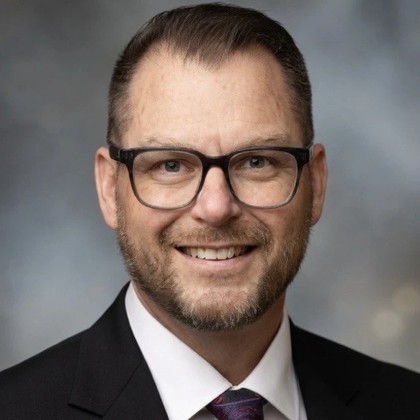
Mike is a serial entrepreneur drawn to nascent markets — the ones without a playbook yet. His pattern is consistent: find the structural gap others overlook, then build the business that closes it. He saw that gap in wildfire risk — the chasm between what insurers urgently need and what legacy models actually deliver — and founded ARIS, where he leads commercial strategy and platform partnerships. Prediction, graded by reality.
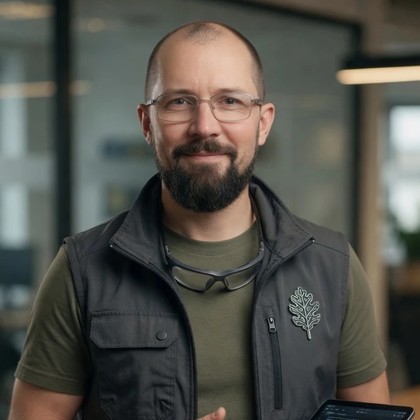
The architect. Expertise at the intersection of geospatial science, machine learning, and actuarial modeling. Built the wildfire model from scratch — a disciplined hybrid architecture built to survive hostile actuarial diligence.
See the standard for yourself
We’ll walk you through how ARIS validates, and what it can do for your customers. Deeper technical diligence happens under agreement.
The right platform partner doesn’t just license ARIS — they fold independent, verifiable wildfire intelligence into the standard the whole industry ends up holding. We built this to become infrastructure — the standard others measure against.